The B.A. in Natural and Applied Sciences (Computer Science and Biology) is intended to prepare students for a future in a multi-disciplinary environment by providing a degree in the interdiscipline of computer science and biology, with curriculua that explicitly integrates AI and machine learning.
In contrast to a double-major or major-minor, where students take courses in two disciplines that are independent of one another, this major will involve coursework that explicitly connects the two disciplines with a focus on mutual interdependencies, co-advancement of new ideas, cross-disciplinary communication, etc.
Notably, the demand for general interdisciplinary degrees is increasing (an anticipated 8% by 2028, according to learn.org) and those involving computing and life sciences are expected to exceed this rate, with the global market expected to grow by $8.6B by 2027 (MarketsAndMarkets), due to increased demand for precision medicine, rise in pharma biotech R+D expenditures, and reduced costs of genome sequencing.
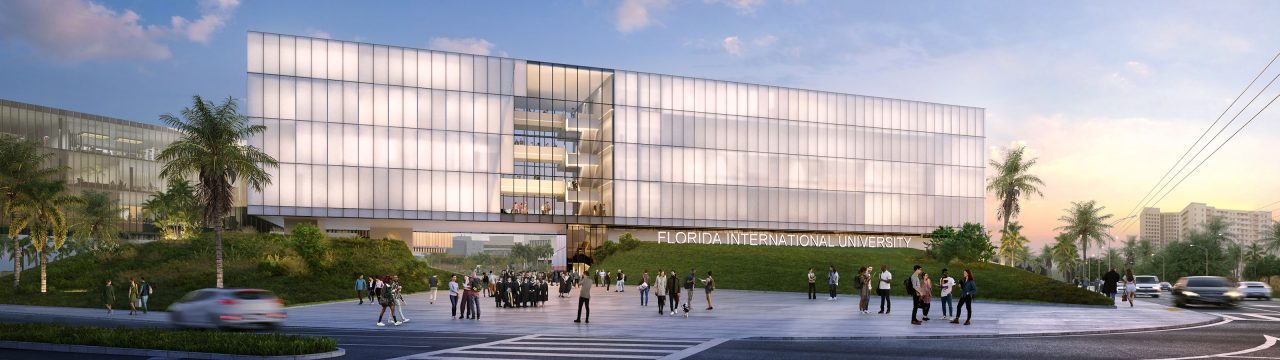
FIU Innovation Center (opening 2025-2026) will house cutting-edge interdisciplinary research and teaching computing labs.
The Bachelor of Arts in Natural and Applied Sciences prepares students for success in this future landscape, by providing foundational courses and a diverse set of electives in both disciplines, and seasoning the curriculum with interdisciplinary coursework in both the lower and upper division, involving vertically integrated projects that solve real-world problems in the interdiscipline.
A visual organization of required, elective, and pre-requisite courses is provided in the flowchart below.
Have questions, or are you ready to join us? Speak with an advisor by completing this short questionnaire.
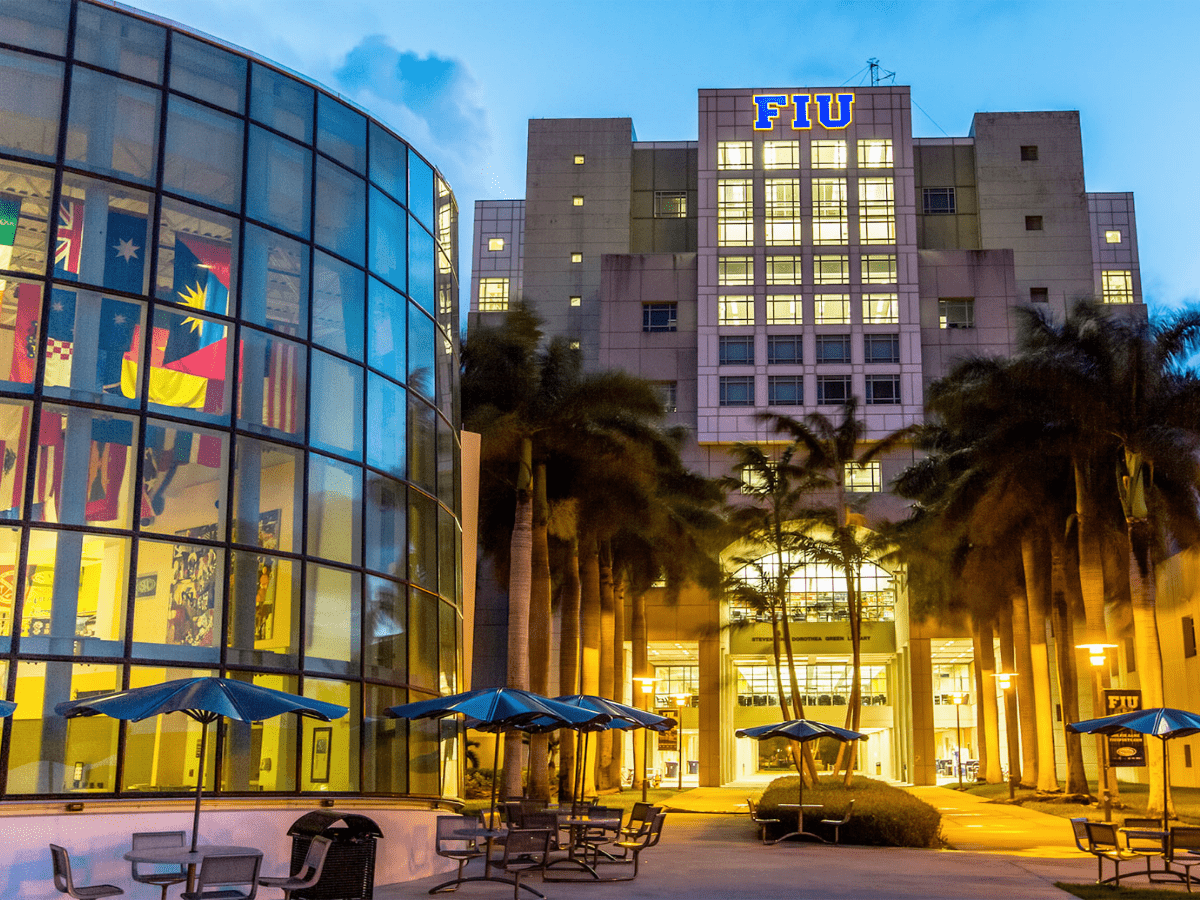
U.S. News and World Report Best Colleges 2025 rankings released in 2024 places Florida International University at No. 46 among public universities.
Core Courses
|
|
Elective Courses (4 Courses, 8 Credits)
Choose one course from CS, one course from Biology, and two Biology Labs.
COMPUTER SCIENCE
- CAP4830 Simulation and Modeling
- COP4534 Algorithm Techniques
- CIS4203 Digital Forensics
- COT4521 Introduction to Computational Geometry
- CGS3095 Technology in the Global Arena
- CAP4641 Natural Language Processing
BIOLOGY
- PCB4462C Introduction to Landscape Ecology with GIS
- BSC4422 Biotechnology: Appliations in Industry, Agriculture, Medicine
- BSC4401 Principles in Forensics Biology
- BSC4443 Functional Genomics and Proteomics
- PCB4561 Epigenetics
- PCB4674 Evolution
- PCB4663 General Human Genetics
- ZOO4781 Sensory Systems in Neurobiology
- BSC3400 Wildlife Conservation, Forensic and Crime Science
- OCB4711 Fisheries Science
- PCB4932 Topics in Ecology
Frequently Asked Questions
Are there opportunities for research within this program?
Yes, students are encouraged to participate in research projects, often in collaboration with faculty members. Interdisciplinary research projects will also be available in the VIP course sequence.
How does this major prepare students for the job market?
We have built this curriculum alongside and directly motivated by industry needs. Students will have opportunities to engage in internships, projects, and networking events. VIP course projects will also involve the opportunities to build connections.
What kind of support is available?
We offer a range of support services, including dedicated academic advising, student assistants in both departments, career counseling, and mentorship programs. Our faculty are also dedicated to providing guidance and support throughout your studies.
I took Programming I and II in Java (or another language). Can I replace Python I and II with those courses?
If you have completed equivalent programming courses in another language, we can assess them for equivalency. However, Python is a core language in the CS/BIO interdiscipline, so it is recommended that you take an advanced Python course to ensure proficiency.
How will my previous courses from another major be applied to this major?
Relevant courses, especially those in calculus, statistics, biology, or any programming-related courses, may be counted towards your degree requirements. We will review your transcript and determine equivalency.
How does this major emphasize practical applications?
The reality is that no discipline fundamentally stands on its own, and modern practical applications will all involve interdisciplinary work. The points of emphasis of this type of degree is tightly aligned with what students will face after graduation, whether their future is industry or academia.
Can I transfer into this major from another university?
Absolutely! We welcome transfer students from other institutions.
Your previous coursework will be evaluated for equivalency, and we will work with you to ensure a smooth transition into our program.